HaUI Offers Up to VND 1 Billion to Attract Professors and Sets New Directions at Its 2026 Young Scientists Meeting
Hiring support of up to VND 1 billion for professors, VND 700 million for associate professors and VND 500 million for PhD holders was a highlight of the meeting with young scientists on November 7, 2026. Alongside attracting talent, Hanoi University of Industry (HaUI) is focusing on building a strong academic environment, removing barriers to research and helping scientific ideas become valuable products.
Held for the first time, the meeting between university leaders and young scientists brought together the Board of Directors, representatives of units and research groups, and nearly 70 young scientists. Beyond reviewing results, the meeting gave much of its time to listening to difficulties, recommendations and proposals to advance science, technology and innovation at HaUI.
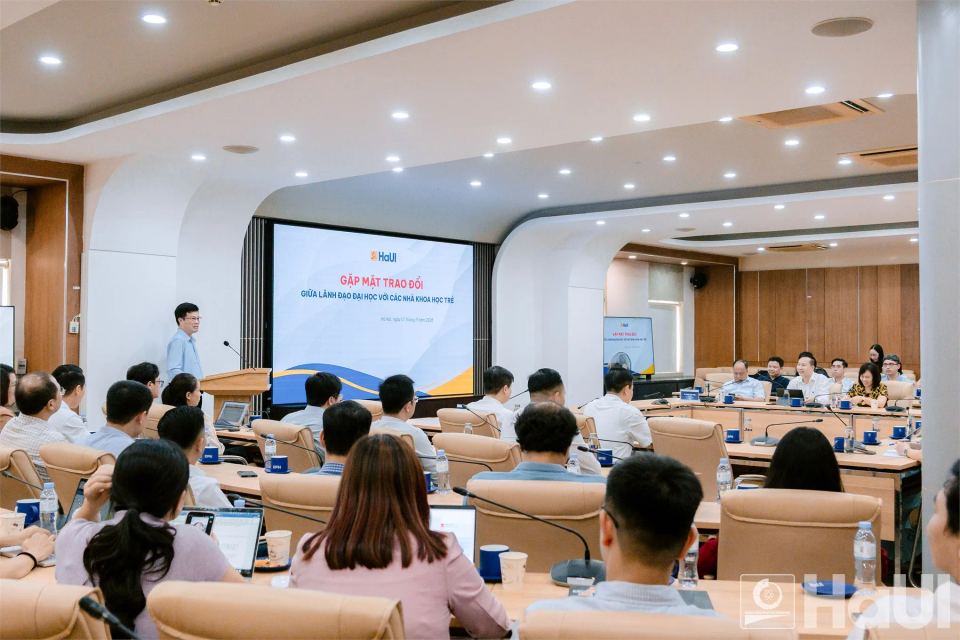
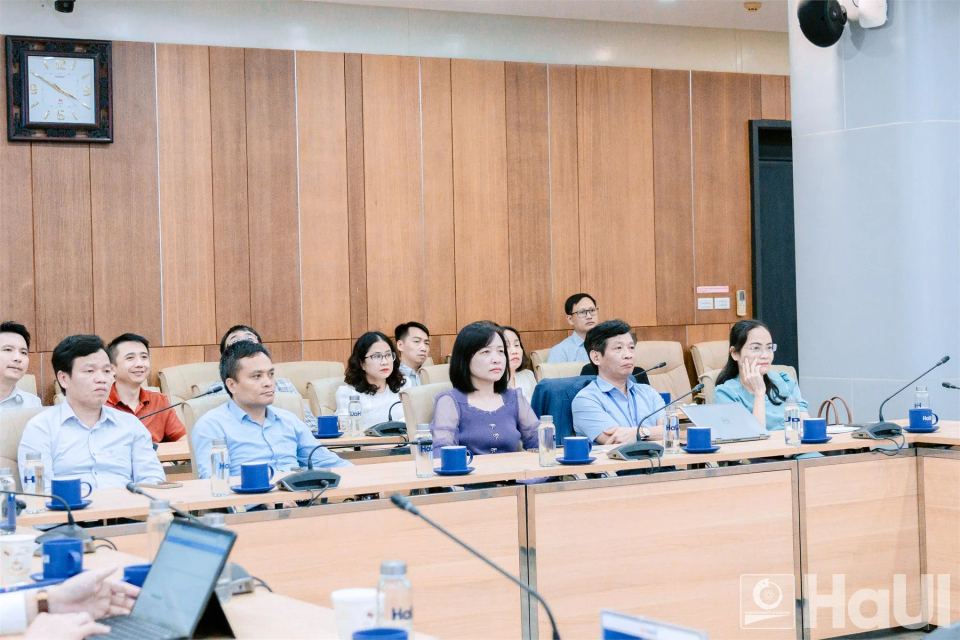
An overview of the meeting between HaUI leaders and young scientists
Attract, retain and develop: the foundation for research capacity
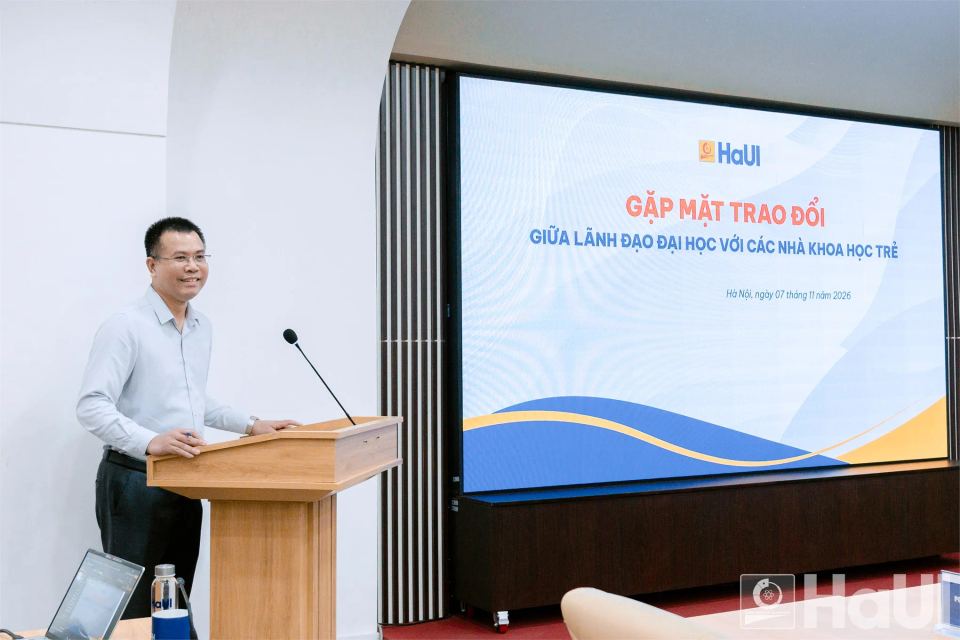
Opening the meeting, Assoc. Prof. Dr. Kieu Xuan Thuc, Party Secretary and President of Hanoi University of Industry, affirmed that young scientists are a core source of knowledge and a pioneering force for innovation and the sustainable development of the university. With strategic goals to 2030 and a vision to 2035, including the aim of joining the top 400 universities in Asia for innovation and the top 20 Vietnamese institutions in science, technology and innovation, he stressed: "We must be ambitious."
With that ambition, the President asked the meeting to focus on three things: listening and sharing; setting directions and building connections; and gathering feedback to further improve mechanisms and policies. He highlighted HaUI's multidisciplinary advantage and encouraged the scientists to raise issues openly and propose new ideas, building a connected and creative research community.
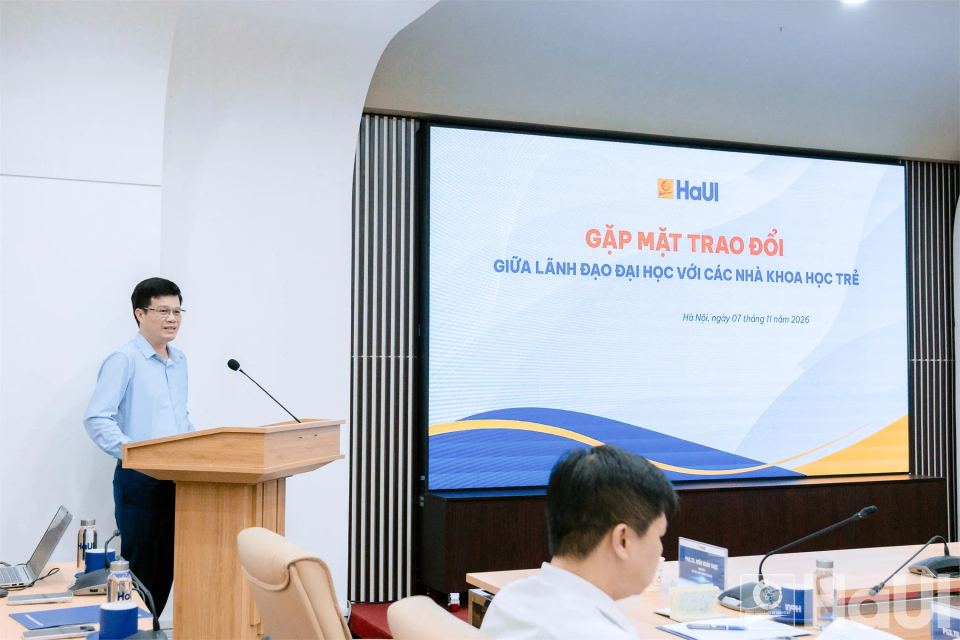
President Kieu Xuan Thuc opens the meeting and sets out the topics for discussion
Turning investment in people into concrete measures, Mr. Phan Dang Hung, Head of the Department of Organization and Personnel, reported that as of October 31, 2026, HaUI had 1,056 full-time lecturers, nearly 50% of whom hold a doctorate, and 172 lecturers currently pursuing PhDs. To raise the share of lecturers with doctorates to over 60% by 2030, the university is focusing on three pillars: attracting, retaining and developing its staff.
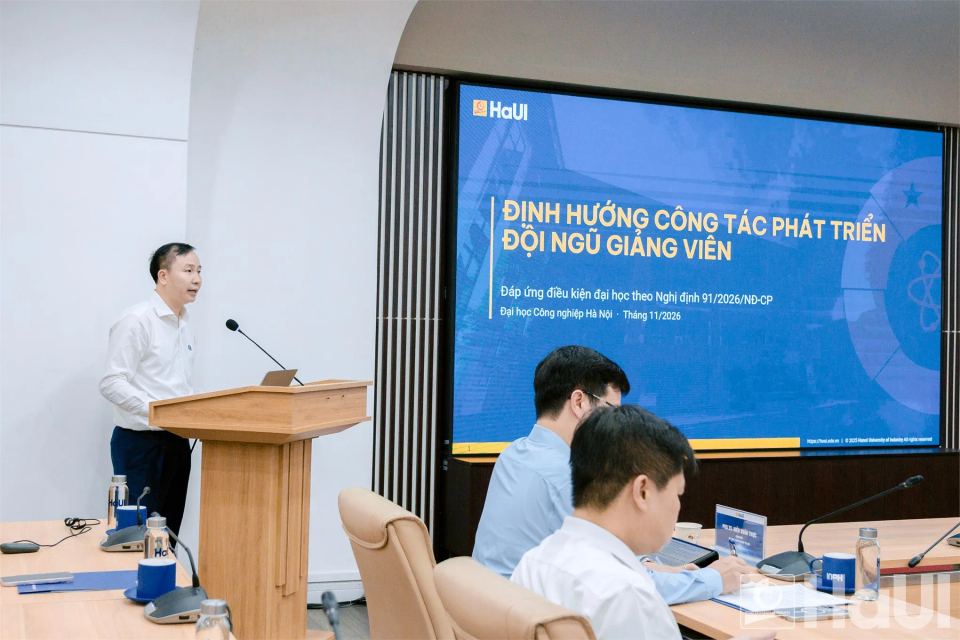
Mr. Phan Dang Hung, Head of the Department of Organization and Personnel, presents the staff development plan
Notably, the President signed the Scheme to Attract Highly Qualified Lecturers and Experts for 2026–2030 on October 30, 2026. Under the scheme, the basic one-time support is VND 200 million for PhD holders, VND 300 million for associate professors and VND 500 million for professors. With additional performance-based support, the maximum total can reach VND 500 million, VND 700 million and VND 1 billion respectively. The hiring policy is part of a wider set of measures to improve pay, working conditions, training and professional development so that scientists can build long-term careers at HaUI.
Research results: a driver for interdisciplinary cooperation
Investment in people is matched by notable research results. According to Mr. Trinh Trong Chuong, Head of the Department of Science, Technology and Innovation, the 69 young scientists surveyed have published 1,119 scientific papers, including 581 indexed in Scopus/WoS and 338 in Q1–Q2 journals. They have also led or taken part in 190 science and technology projects, served as principal investigators 49 times and hold 30 intellectual property registrations. Q1–Q2 papers rose from 34 in 2024 to 79 in 2025, an increase of about 132%.
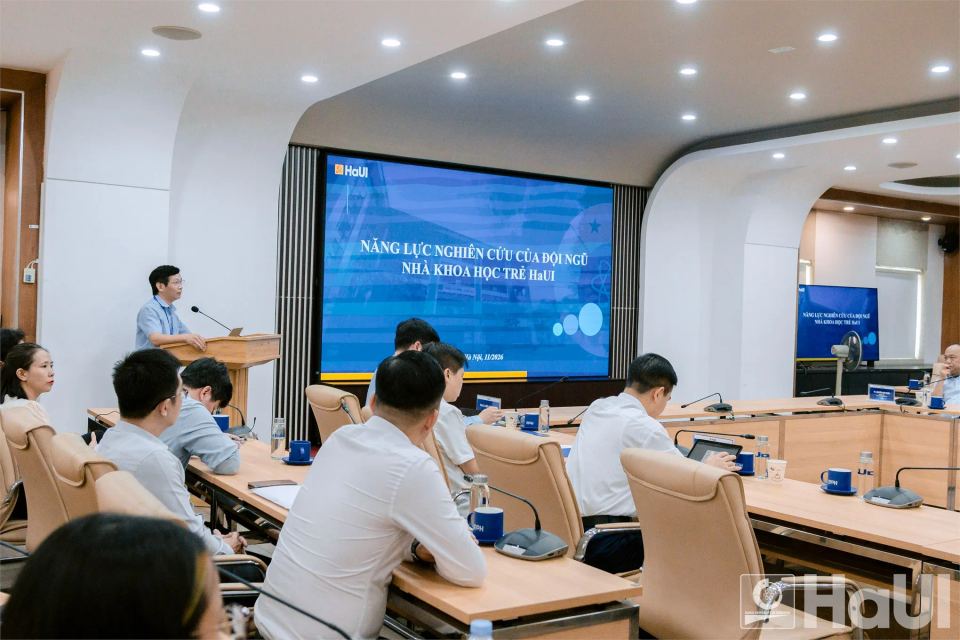
Mr. Trinh Trong Chuong, Head of the Department of Science, Technology and Innovation, analyzes the research capacity of young staff
Behind these figures, the report also pointed to areas for further growth: uneven capacity to lead research projects, limited interdisciplinary cooperation, and the need to turn more research results into intellectual property and technology transfer. Alongside encouraging high-quality international publications, HaUI therefore aims to strengthen mentoring between generations of scientists, share infrastructure and connect research groups with industry. Young scientists explored these issues further from their own experience in the discussion session.
Listening to support, acting to remove bottlenecks
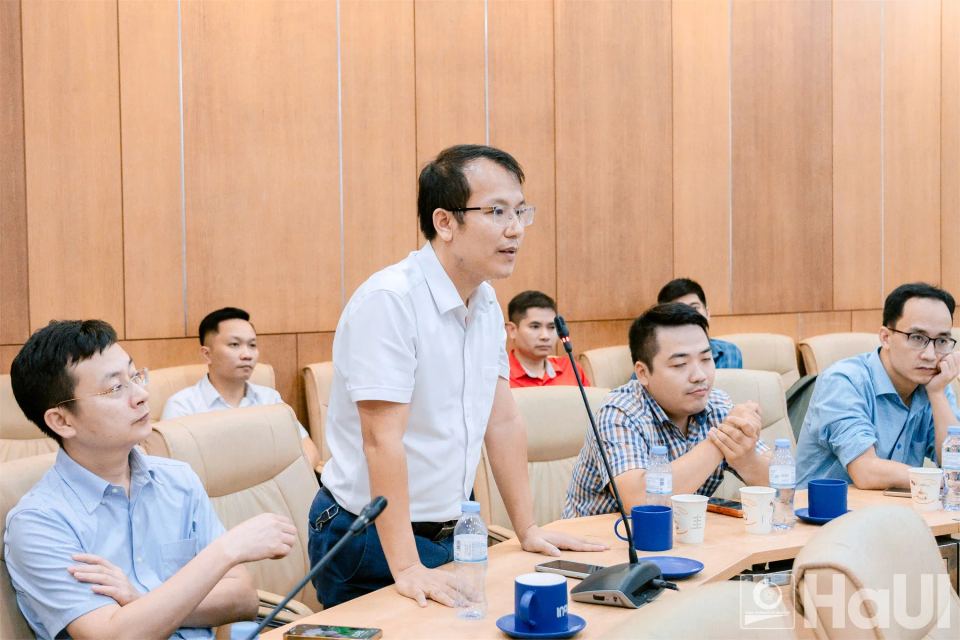
From the perspective of economics, Dr. Tran Cuong (School of Economics) proposed closer cooperation between engineering and technology on one side and economics and management on the other, to address green transition, digital transformation and the circular economy. He noted that connecting scientists within the university and working with businesses, localities and international partners should go hand in hand with access to research databases and clear product goals.
In electrical and electronic engineering, Dr. Pham Thanh Son (School of Electrical and Electronic Engineering) shared research directions in photonics, metamaterials and wireless power transfer, and proposed expanding cooperation in silicon photonics research and improving access to laboratories, licensed software and expert partners.
Dr. Nguyen Cong Hong Phong (School of Mechanical and Automotive Engineering) emphasized the need for mentoring at the early stage of a research career, and for training in writing research proposals, finding funding and developing international cooperation with real results. Contributions from these three fields shared one wish: to be connected and supported so that research capacity can be used to the fullest.
1 / 13
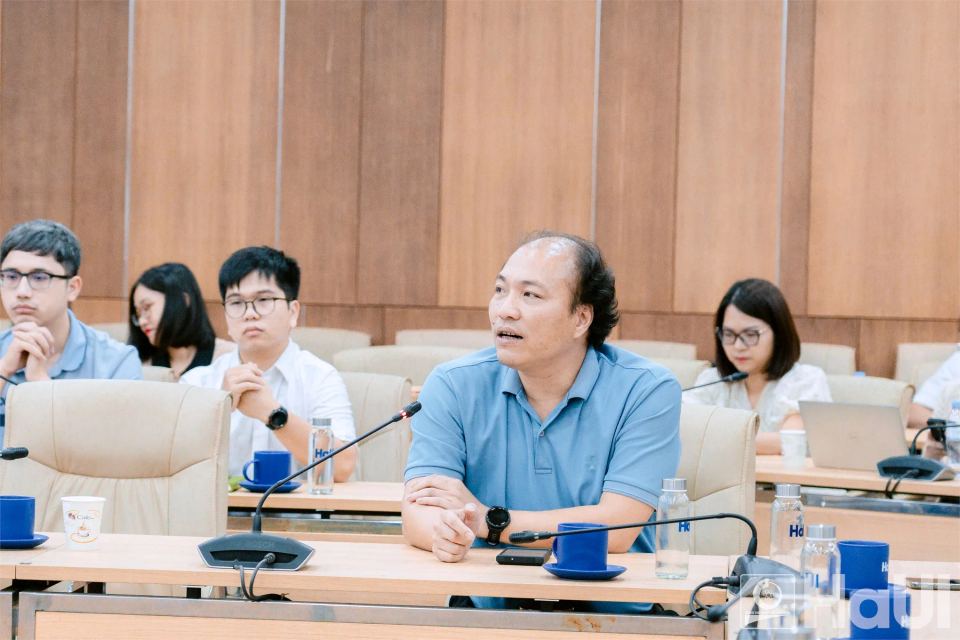
Young scientists share their research results and proposals at the meeting
Concluding the meeting, President Kieu Xuan Thuc reaffirmed the core role of young PhD holders and research groups in achieving the university's goals in science, technology and innovation. On behalf of the leadership, he committed to removing bottlenecks in administrative procedures, mechanisms, policies and the working environment, so that scientists can fully dedicate themselves and develop their careers.
According to the President, change must start with the research mindset: moving from individual, single-discipline work to strong, promising and specialist research groups that are interdisciplinary and cross-sectoral, and linking high-quality international publications with intellectual property registration, product development and commercialization of results.
The finance and facilities departments were asked to review and simplify administrative procedures and create a mechanism for sharing research infrastructure. He asked schools, faculties and institutes to cut unnecessary meetings and administrative work and to set aside time and space for research. He also encouraged young scientists to take the initiative in proposing new projects, strengthen cooperation with businesses and international partners, and boldly take on new and challenging tasks.
From the talent attraction policy to concrete commitments after the dialogue, the meeting showed HaUI's consistent direction: investment in people must go together with a supportive research environment and practical support mechanisms. When ideas are connected, resources are used effectively and research results are put into practice, young scientists will continue to contribute to the quality of training, the academic standing and the sustainable development of the university.
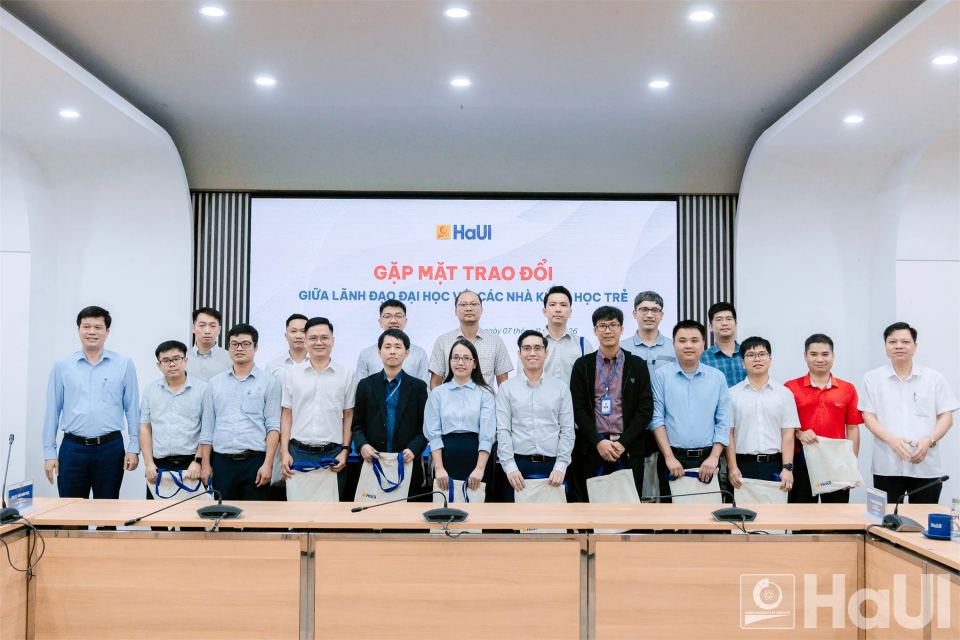
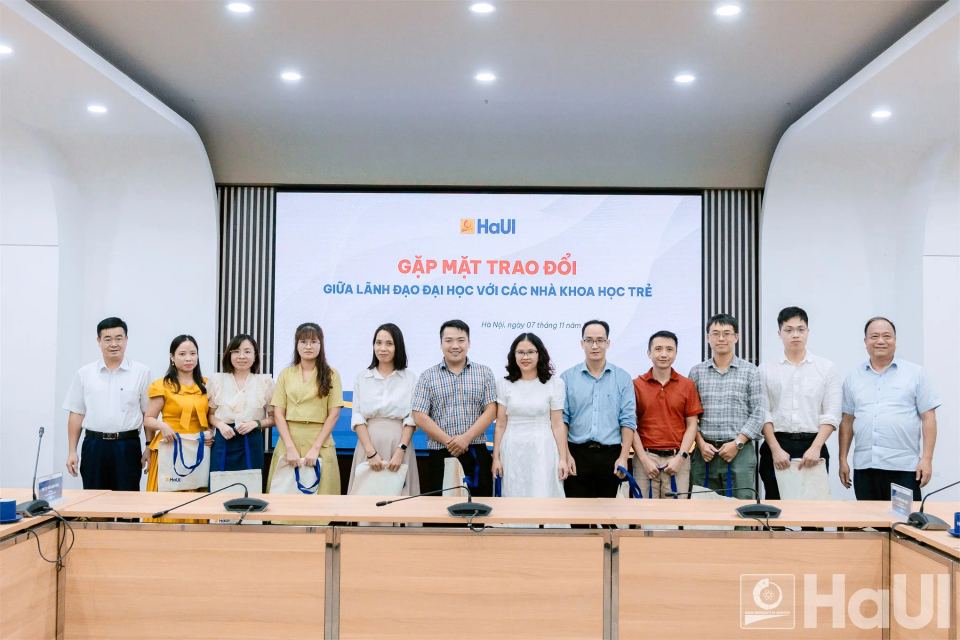
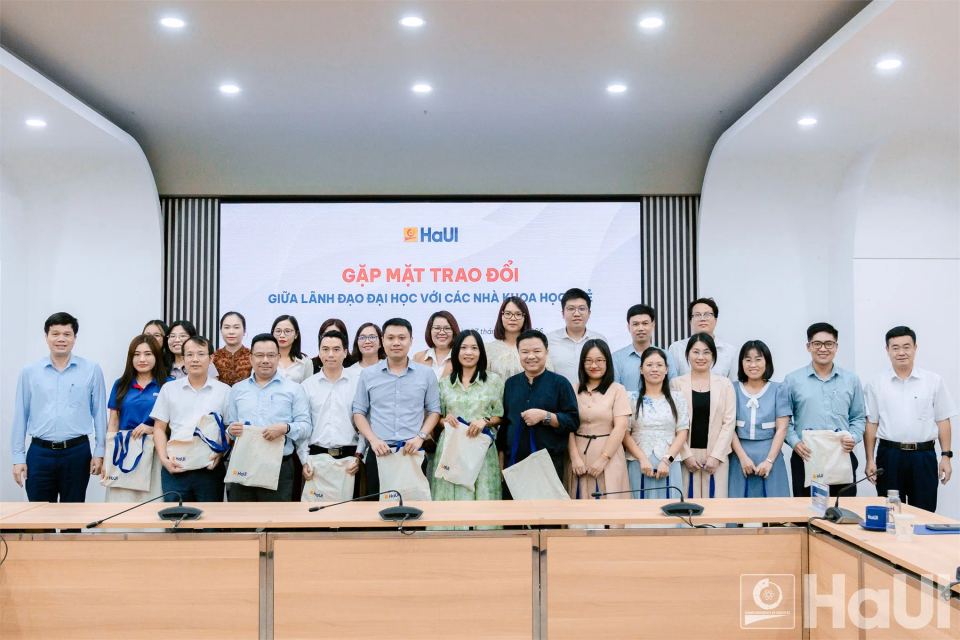
University leaders with HaUI's young scientists
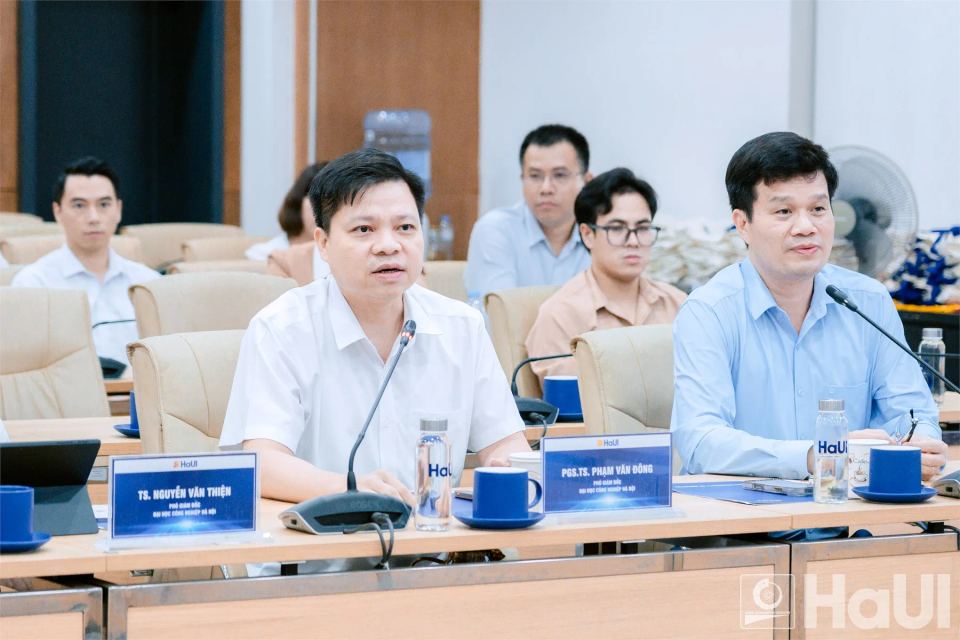
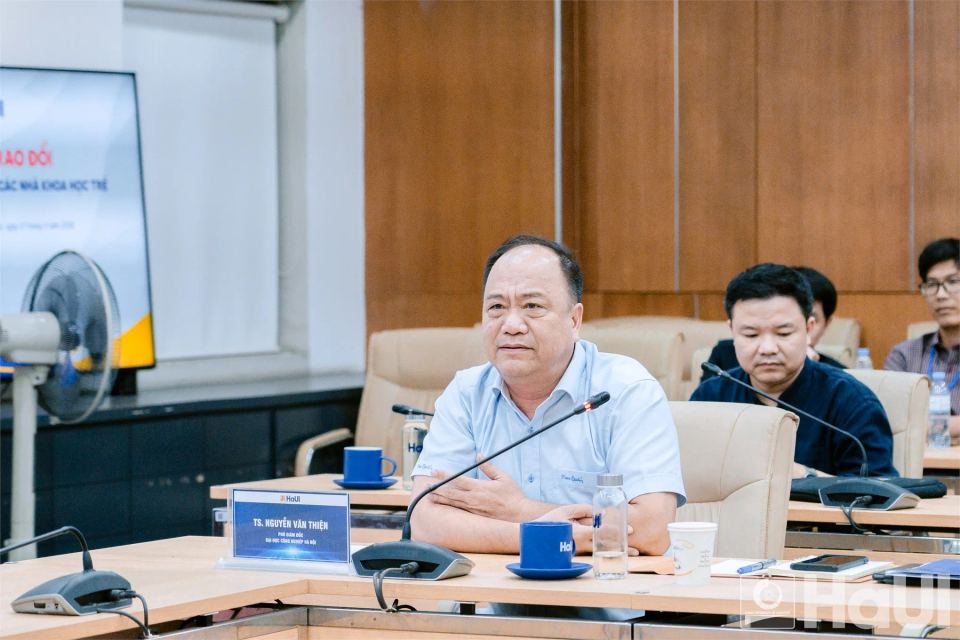
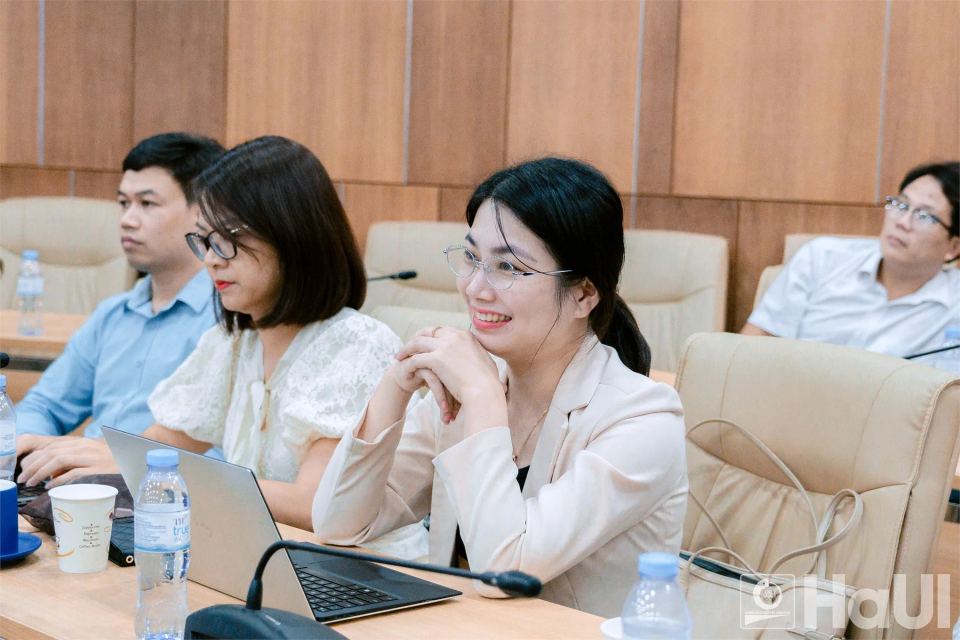
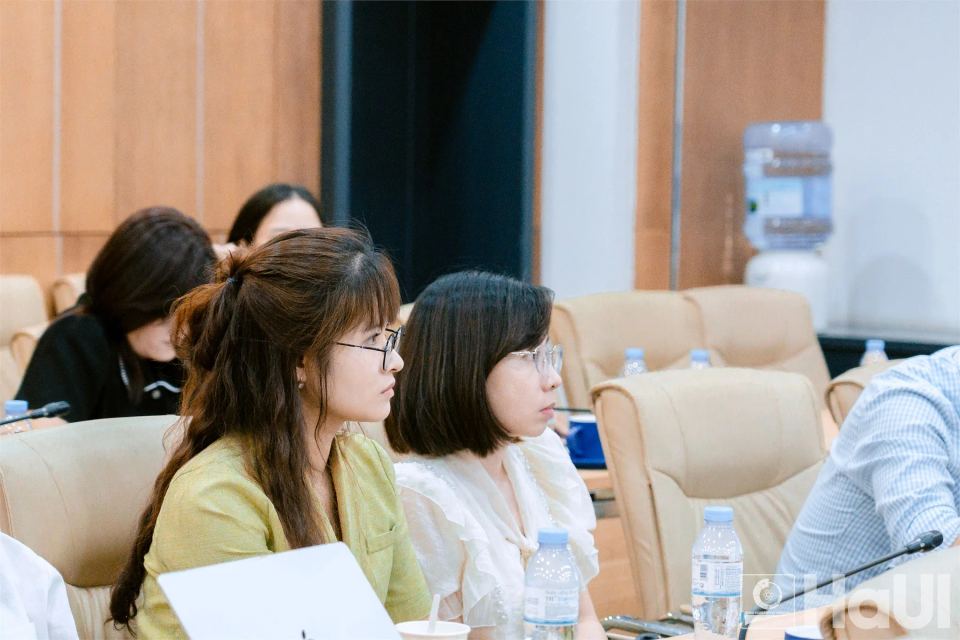
More photos from the meeting: